

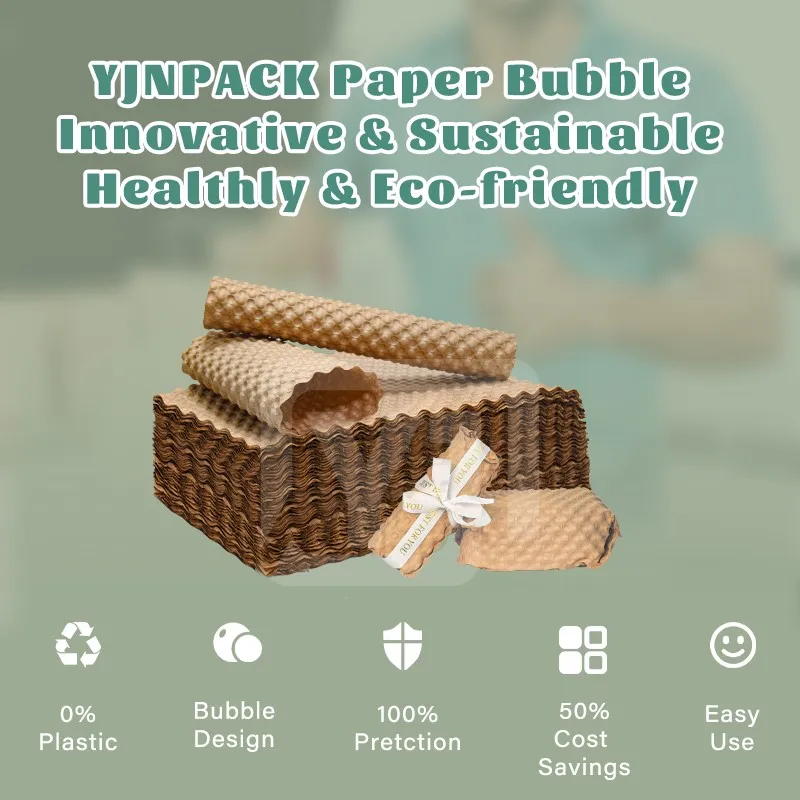
Paper air bubble,(also known as corrugated paper cushioning material) is an emerging environmentally friendly packaging material. Compared with traditional plastic bubble film, pearl cotton (EPE), etc., its core advantages are reflected in the following aspects:
1. Environmental protection: core differentiated competitiveness
Buyer pain points:
* Increased sensitivity to plastic pollution: Consumers in the European and American markets have a surge in demand for environmentally friendly packaging (such as Amazon's "Climate Friendly Commitment" label), and plastic packaging may trigger negative brand associations.
* High recycling cost: Traditional plastic bubble film needs to be recycled separately, and many regions lack recycling channels. Consumers may resist due to the trouble of handling it.
Advantages of paper air bubble wrap:
* 100% degradable: The material is pure paper fiber, which can be directly recycled with cartons, in line with the EU "Packaging and Packaging Waste Regulation" (PPWR) and other policy guidelines.
* Carbon reduction labeling: It can be labeled with "zero plastic packaging" and "carbon neutrality" and other certifications to meet consumers' value recognition needs for ESG (environment, society, governance).
2. Cost and efficiency: long-term hidden benefits
Buyer pain points:
* Waste of transport volume: EPE requires custom molds and bubble film rolls to take up storage space, resulting in higher logistics costs.
* Poor unpacking experience: Plastic bubble film easily sticks to products, and unpacking requires effort to tear, affecting user experience (high-end customers of luxury goods and electronic products are particularly sensitive).
Advantages of paper air bubbles:
* Lightweight design: The density is lower than that of EPE, reducing the cost of international express delivery by weight.
* Integrated structure: It can be directly molded, reducing the filling process and improving packaging efficiency (for example, 3C products can be directly embedded in the honeycomb paper card slot without additional winding).
3. Brand premium: Differentiated marketing value
* Visual texture improvement: The surface of the paper air bubble wrap can be printed with the brand logo or environmental slogans to enhance brand tone (such as DTC brand Glossier uses customized pulp packaging to enhance the user's sense of unpacking ritual).
* Social media communication: Generation Z consumers tend to share a "sustainable unpacking experience", and the environmental protection attribute of the paper bubbles is easy to become UGC content material
The investment value of paper bubble wrap from the perspective of manufacturers
1. Industry trend driven: policy and market demand dual engines
*Regulations force transformation:
The EU will impose a plastic packaging tax (€0.8/kg) from 2025, and the UK, Canada, and other countries will gradually ban disposable plastics, and traditional packaging manufacturers face compliance risks.
Head retailers such as Walmart and IKEA require suppliers to provide recyclable packaging solutions.
*E-commerce growth dividend: The global e-commerce penetration rate has increased (expected to reach 24% in 2025), and the demand for packaging has surged, but brands are in urgent need of cost reduction, efficiency improvement, and green transformation.
2. Production cost and technical adaptability
Pain points and opportunities:
*Initial equipment investment: Paper bubble wrap requires a special die-cutting machine or hot pressing equipment, and traditional plastic manufacturers need transformation costs (but lower than the transformation of biodegradable plastic production lines).
*Raw material stability: Pulp prices are affected by international market fluctuations (such as a 20% increase in pulp prices in 2023), and long-term supply chain cooperation needs to be established.
*Room for technological upgrade: Improving compressive strength by adding natural fibers (bamboo pulp, bagasse), or applying a waterproof layer to expand application scenarios (such as cold chain packaging).
3. Return on Investment (ROI) Analysis
*Short-term costs: The unit price of bubble wrap may be higher than that of ordinary paper bubble wrap (about 10-15% higher), but it can be balanced through the following paths:
*Reduced design: Use structural mechanics optimization to reduce material usage (such as Tesla battery packaging using honeycomb paper instead of EPS foam).
*Premium pricing power: Environmentally friendly packaging can support a 5-8% increase in product unit price (Nielsen survey shows that 66% of consumers are willing to pay more for sustainable packaging).
*Long-term benefits:
*Avoid plastic taxes/carbon tariffs and reduce compliance costs.
*Binding major customers' ESG strategies (such as Apple's plan to achieve carbon neutrality in the supply chain by 2030, suppliers need to match its packaging standards).

Conclusion
*Recommended Investment Scenarios:
1. Cross-border brands focusing on the European and American markets (avoiding policy risks and increasing premium space).
2 . High value-added categories (3C, beauty, luxury goods) need to strengthen brand value through packaging.
3. Manufacturers with pulp supply chain resources or policy subsidy areas (such as Southeast Asian bamboo pulp production areas).
Risk Warning:
1. Performance needs to be verified in combination with product compression test data (such as ISTA 3A standard) to avoid customer complaints due to insufficient protection.
2. Small and medium-sized manufacturers can give priority to the "mixed solution" transition (such as paper bubble wrap for the outer box + a small amount of pearl cotton lining) to balance costs and transformation risks.